

Services

Home Care Services in Annapolis, Arnold, Severna Park, Edgewater, and Davidsonville
Families often begin their search with a service label—companion care, personal care, dementia care, skilled nursing, or live-in support. Those labels are helpful, but they tell only part of the story.
The reality is that care changes over time. What begins as help with meals, transportation, or housekeeping may gradually become assistance with bathing, mobility, medication routines, or more continuous support. The best care isn’t simply the right service today—it’s care that evolves as needs change.
CareProvide helps families throughout Annapolis, Arnold, Severna Park, Edgewater, Davidsonville, and surrounding Anne Arundel County communities navigate that journey. Rather than thinking in terms of disconnected services, we encourage families to think about the progression of care and where their loved one is today.
Care for Every Stage of the Journey
Most families don’t start with a diagnosis or a perfect description of what they need. They start with a feeling that something has changed.
The four stages below offer a simple way to understand how care often progresses at home—from a little extra support to more comprehensive, hands-on care. Every family’s journey is different, but understanding these stages can make it easier to choose the right level of support today, knowing that care can grow alongside your loved one’s needs tomorrow.

Stage 1. Home Support and Companionship
This is where many families begin.
A parent may still be living independently, but the week is starting to slip. Meals are inconsistent. Laundry builds up. Appointments get missed. Transportation becomes harder. Isolation becomes part of the picture.
At this stage, a little help can make a meaningful difference. Care often includes companionship, meal preparation, transportation, errands, light housekeeping, medication reminders, and regular safety check-ins. This level of support is ideal for older adults living alone, those with early Parkinson’s disease or mild cognitive changes, or individuals recovering after a hospital stay who need extra assistance while regaining their independence.

Stage 2. Light Personal Care
Support is no longer needed just around the home- its about helping with personal care.
Dressing takes longer. Bathing becomes harder. Mobility changes what the day requires. Getting to the bathroom safely may no longer be simple. The family starts to realize that support is no longer just about tasks around the house.
At this stage, care often includes assistance with bathing, dressing, grooming, toileting, transfers, mobility, and other daily activities that help preserve comfort, dignity, confidence, and independence. This level of care is often appropriate for individuals experiencing early mobility changes, recovering from surgery or illness, living with mild Parkinson’s disease, or beginning to need hands-on assistance with personal care.
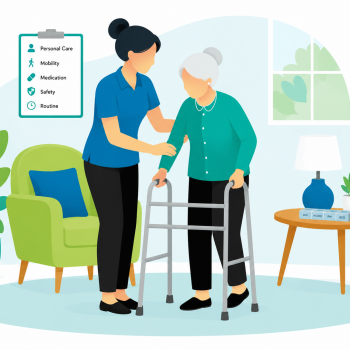
Stage 3. Enhanced Personal Care
Care is becoming more hands-on and requires greater consistency.
Daily routines now require regular assistance and closer supervision. Balance and mobility may be less predictable. Memory changes can make it harder to complete familiar tasks or follow routines. Families often find themselves providing frequent reminders, monitoring for safety, and worrying about what might happen when they are not there.
At this stage, care often includes consistent assistance with personal care, mobility, transfers, medication assistance as permitted, fall prevention, structured routines, and gentle cueing. It is often appropriate for individuals living with moderate Parkinson’s disease, progressing dementia, recovering from a stroke, or managing increasing frailty or multiple chronic conditions.
Stage 4. Comprehensive Care & Continuous Support
The needs have become too great to manage alone.
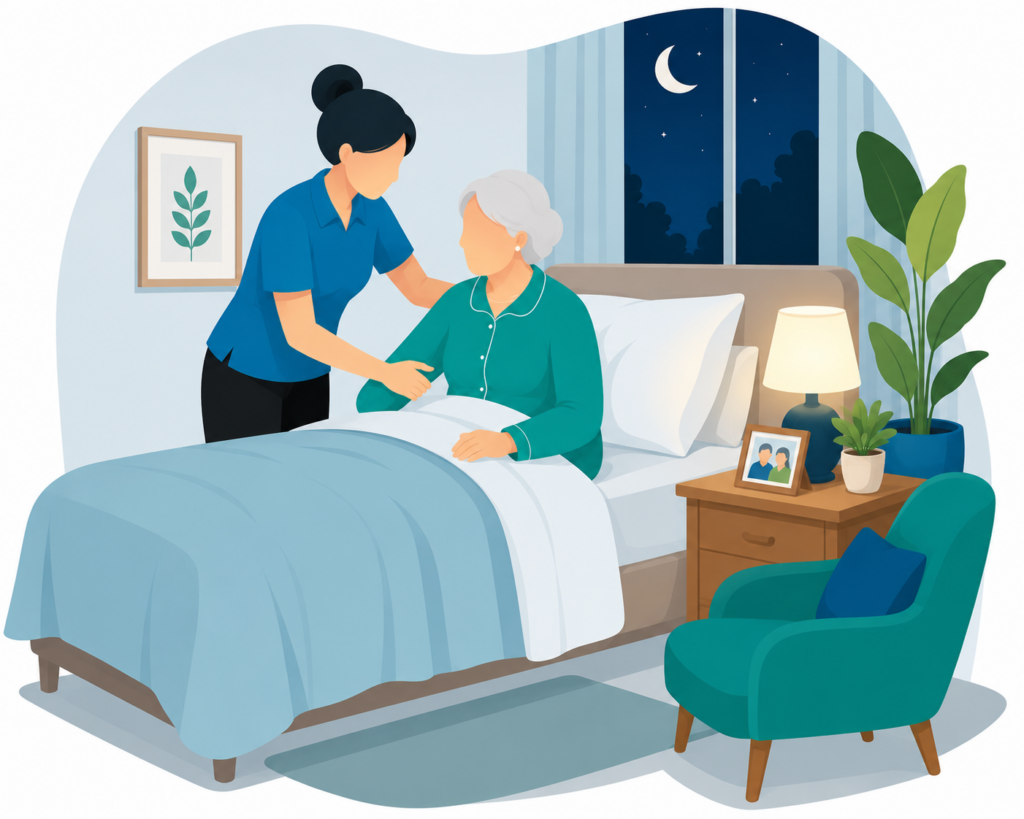
Your loved one may now require assistance throughout the day and night. Walking is no longer safe without help. Memory loss or confusion creates ongoing safety concerns. Nighttime needs become more frequent. Family caregivers find themselves constantly on alert, worried about falls, wandering, medications, or what could happen when no one is there.
At this stage, care often includes comprehensive assistance with all activities of daily living, transfers, incontinence care, mobility, cognitive support, redirection, behavior management, and continuous safety oversight. This level of care is often appropriate for individuals living with advanced Parkinson’s disease, advanced dementia, hospice or palliative care needs, or other complex medical conditions that require extensive daily support.
Specialty Care
Parkinson's. Dementia. Alzheimer's. End of Life. Skilled Nursing.

Parkinson's Care at Home
Helping you navigate every stage with confidence.
Parkinson’s disease changes over time, and so should the care. Symptoms fluctuate, medication timing becomes increasingly important, and mobility, communication, cognition, and daily routines can all evolve. Families need caregivers who understand these changes and can adapt with them while helping clients remain safe, active, and engaged in the life they love.
CareProvide’s commitment to Parkinson’s care is deeply personal. Our specially trained caregivers, nurse-led oversight, personalized care plans, and consistent care teams provide the expertise families need at every stage of the disease. Through close collaboration with neurologists, therapists, and our Parkinson’s InCIRCLE CarePartners™ network, we coordinate care that supports not only the individual living with Parkinson’s, but the entire family.

Alzheimer's and Dementia Care at Home.
Supporting meaningful moments through every stage.
Dementia affects far more than memory. It changes the way a person communicates, experiences the world, and manages everyday life. As needs evolve, families need caregivers who understand dementia-specific communication, behavior changes, safety concerns, and meaningful engagement so their loved one can continue living with dignity, comfort, and purpose.
CareProvide combines specialized dementia training with nurse-led oversight and coordinated care. Our caregivers receive ongoing education in evidence-based dementia care, while our nurses develop personalized care plans, coach caregivers, and coordinate with physicians, therapists, hospice providers, and our InCIRCLE CarePartners™ network. As dementia progresses, we adapt alongside changing needs—providing compassionate, consistent support for both clients and the families who care for them.
End-of-Life Care at Home.
Compassionate support when every moment matters.
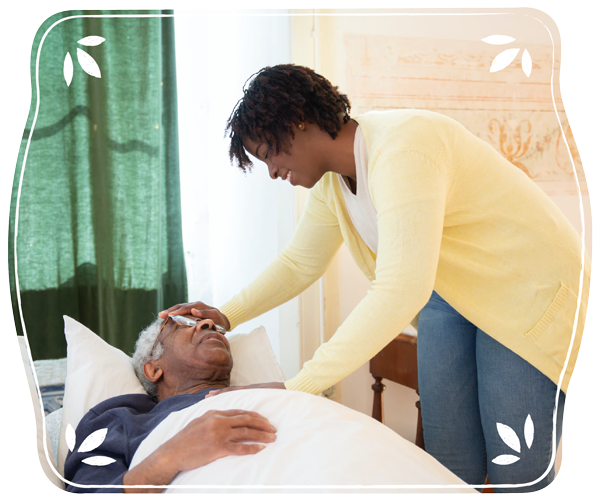
End-of-life care is about far more than meeting physical needs—it’s about preserving comfort, dignity, and peace for both the individual and those who love them. During this time, families often need extra support as needs change, symptoms evolve, and caregiving becomes more physically and emotionally demanding. Compassionate caregivers provide personal care, companionship, comfort measures, and a reassuring presence so families can focus on spending meaningful time together rather than managing every detail of care.
CareProvide works alongside hospice to provide continuous support when hospice is not present. Our caregivers and nurses coordinate closely with hospice nurses, physicians, and other members of the care team to reinforce the plan of care, monitor changes in condition, and communicate concerns promptly. Together, we help create a calm, comfortable environment where clients can remain safely at home, and families can feel supported, informed, and never alone during one of life’s most important journeys.

Skilled Nursing at Home.
Bringing expert clinical care into the comfort of home.
At CareProvide, nursing isn’t a separate service—it’s the foundation of everything we do. From the first nurse-led assessment through ongoing skilled nursing visits and daily caregiver support, our clinical team works together to help clients remain safe, healthy, and independent at home. Our nurses provide comprehensive assessments, medication management, wound care, post-surgical support, chronic disease management, and ongoing health monitoring while coordinating closely with physicians, therapists, hospice providers, and other members of the healthcare team.
Our nurse-led model seamlessly integrates clinical expertise with compassionate daily care. Personalized care plans guide every visit, while our nurses monitor changes in condition, educate families, and coach caregivers so clinical goals are reinforced throughout the day—not just during nursing visits. Whether a client is recovering from surgery, managing a chronic illness, or experiencing changing health needs, families gain the confidence that comes from coordinated, proactive care designed to help their loved one remain safely at home.
InCIRCLE CarePartners™
Exceptional care rarely comes from a single provider. Through our trusted network of therapists, fitness professionals, home safety specialists, and senior living experts, we coordinate the additional resources clients need—creating a connected circle of care that helps people remain safe, independent, and living well at home.
Home Care Services in Anne Arundel and Surrounding Counties
Anne Arundel County
Annapolis, Severna Park, Arnold, Glen Burnie, Pasadena, Millersville, Crofton, Odenton, Davidsonville, Edgewater, Crownsville, Gambrills
Surrounding Counties
Prince George’s, Howard, and Baltimore

NEXT STEP
Get Clarity on the Next Step
If care at home is becoming harder to manage, the next move should be clear. Start with an assessment so the situation can be understood and a workable plan can take shape.